Private Accounts Can Still Leak Info
- Avetis Chilyan
- Jan 2
- 2 min read

Updated: Feb 24
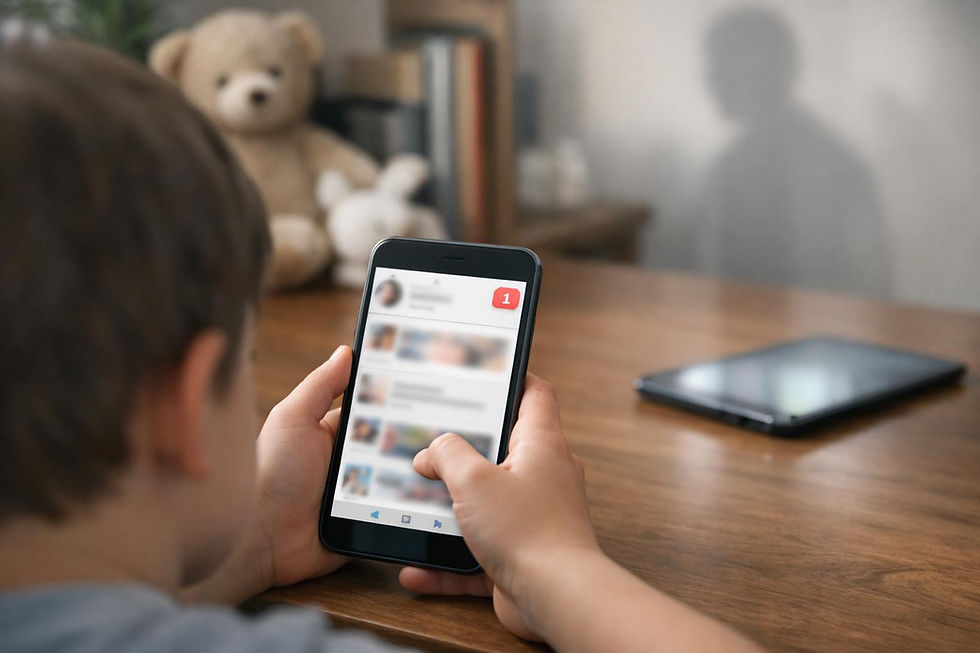
Many parents and kids believe one simple setting solves everything: “Set the account to private.” It sounds reassuring, but private doesn’t always mean protected.
What “Private” Really Means on Most Platforms
A private account usually only limits who sees your content publicly. It may prevent strangers from browsing your posts and restrict access to approved followers. It does not prevent sharing, copying, impersonation, or data collection over time. Privacy settings reduce visibility, but they do not remove risk.
Screenshots and Sharing Can Break Privacy Instantly
Even if an account is private, anyone who can see a post can screenshot, screen-record, save, or share it elsewhere. Privacy controls cannot stop copying; they only control who sees content first. What seems private in the app can become public outside it in seconds.
Friends of Friends Are Still Strangers
Kids often approve requests from classmates, gamers, or “friends of friends.” But not all accounts are trustworthy: some are hacked, some are fake from the start, and some belong to people misrepresenting themselves. A private account is only as safe as the weakest follower, and trust in online connections can be exploited.
Private Messages Aren’t Fully Private
Direct messages feel personal and temporary, but they can be saved permanently, forwarded without notice, or used later for manipulation. Content taken out of context can cause harm even when the conversation seems secure. Private chats do not guarantee private control.
Platforms Still Collect Data
Even on private accounts, platforms store posts, log interactions, collect metadata, and analyze profiles. Privacy settings do not stop this collection; they only adjust who can see the content publicly. Awareness of what the platform sees is just as important as controlling who follows your account.
Impersonation and Overconfidence
Attackers can clone accounts without ever accessing them. They can copy profile photos, usernames, writing styles, and bios to create convincing fake accounts. Kids often assume private accounts are completely safe, believing only friends can see content or that mistakes can always be undone. Screenshots, social pressure, and manipulation mean that trust can be exploited slowly, no matter the settings.
Thinking Beyond Settings
No technical setting can replace judgment, awareness, or communication. Digital safety requires understanding that if someone else can see content, it’s no longer fully private. Teaching children the limits of privacy helps them navigate social media safely while still allowing them to engage, share, and interact responsibly.


