Scams Inside Games Parents Never See

Updated: Feb 24
Scammers know children trust games more than adults, screens more than reality, and in-game friends more than warnings.
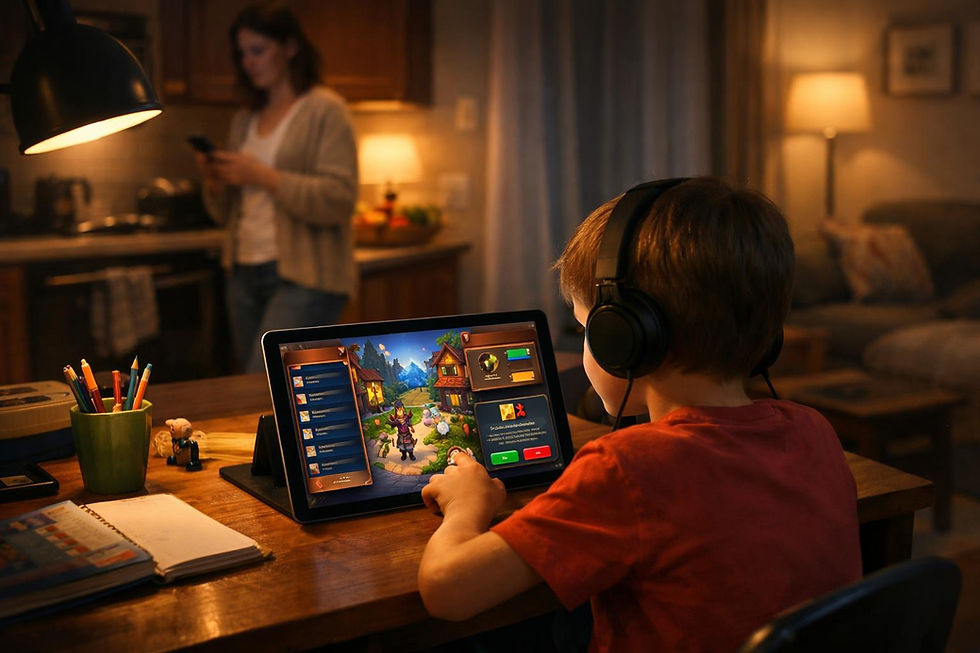
Why Games Attract Scammers
Online games create perfect conditions for manipulation. Children log in daily, spend virtual currency, build friendships, and interact inside systems that feel controlled and safe. Because the environment is familiar, kids lower their guard and assume the platform itself will protect them.
For scammers, this isn’t just entertainment. It’s an ecosystem built on trust, habit, and routine.
How Scams Blend Into Gameplay
Many scams don’t look like scams at all. Offers for free coins, rare skins, or exclusive items are often delivered through private messages or third-party links that appear connected to the game. Clicking them can quietly steal login details or install malicious software without obvious warning signs.
In other cases, scammers gain access to accounts through phishing or in-game tricks. Once inside, they drain items or currency and sell them for real money, often before anyone notices.
When Other Players Become the Threat
Not every risk comes from strangers pretending to be official. Sometimes manipulation comes from players who seem friendly or familiar.
A child may be asked to share a code, send a gift, or trade an item as a favor. Because the request feels social and harmless, they comply without realizing what they’re giving away.
Some scams are disguised as challenges or “tests,” where kids are asked to try something, click a link, or confirm information. These tasks often validate stolen data or open doors the scammer couldn’t access alone.
Why Parents Often Miss the Warning Signs
Game-related charges are frequently labeled as credits or in-game currency, making real spending harder to notice. Private chats may be hidden or inaccessible, and the fast pace of games encourages quick decisions rather than careful thinking.
By the time unusual behavior or missing items are discovered, the damage may already be done.
The Psychology Scammers Exploit
Scammers rely on human behavior, not technical flaws. Urgent offers push kids to act quickly. Authority claims, such as pretending to be a moderator, create pressure to comply.
Reciprocity makes children feel obligated after receiving help, and social proof convinces them that “everyone else is doing it.”
These reactions are natural, especially for kids. The problem isn’t curiosity. It’s manipulation.
Helping Kids Play Safely
Protection starts with understanding how scams work inside games, not banning them outright. Kids need to learn that “free” offers often come with hidden costs, that no one should ask for codes or account details, and that urgent requests are a red flag, not a reward.
Parents can support this by reviewing accounts together, watching for unusual activity or new contacts, and encouraging kids to pause before clicking, trading, or responding.
The goal isn’t fear, but confidence. When children feel safe asking questions and saying no, scammers lose their advantage.
Even in familiar games, risk can hide in plain sight. Teaching kids to question offers that feel too good to be true turns playtime into a safer space, without taking the fun away.


