EIN Theft Explained

Updated: Feb 24
EIN theft is quiet, slow, and often discovered months later, after financial or tax damage has already occurred.
What Is an EIN and Why It Matters
An Employer Identification Number (EIN) is the business equivalent of an SSN. It’s used for taxes and payroll, opening business bank accounts, applying for credit, filing IRS documents, and verifying business identity with vendors. If someone controls your EIN, they don’t need your login passwords to cause damage.
How Scammers Steal or Obtain EINs
Public Records and Documents
EINs leak through old invoices, tax forms sent by email, shared PDFs, cloud storage links, and accounting documents forwarded to third parties. One careless share can expose it permanently.
Compromised Email Accounts
If a business email is breached, attackers quietly search for “EIN,” “W-9,” “1099,” “tax,” or “payroll.” They don’t rush; they slowly collect information.
Fake Vendors and Onboarding Forms
Scammers pose as payroll providers, accounting services, compliance firms, or insurance agents. They request a W-9 for setup and then disappear.
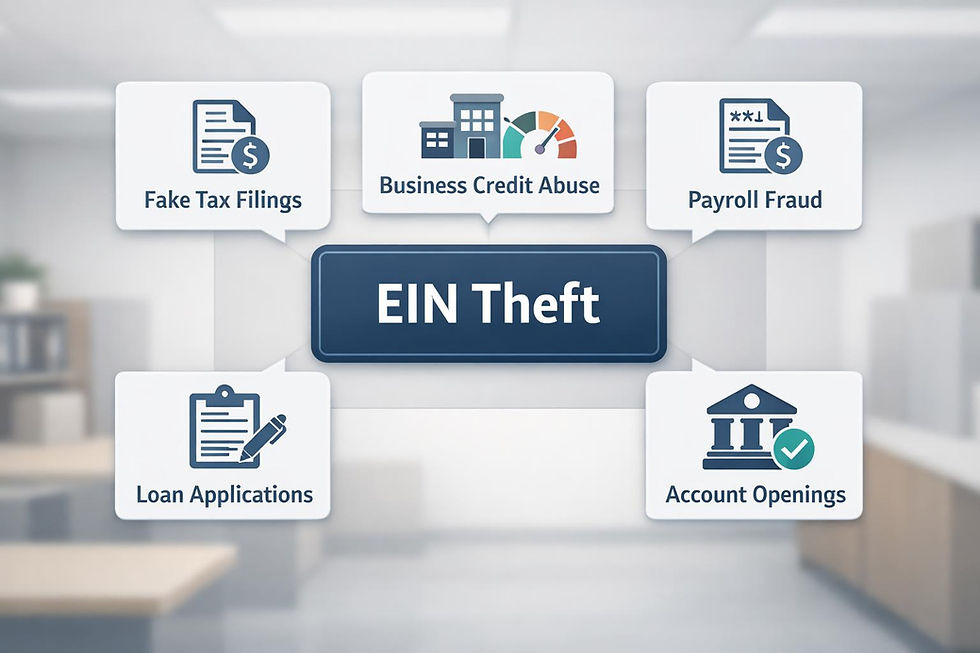
What Criminals Do With a Stolen EIN
Fake Tax Filings
Attackers submit fraudulent payroll returns, fake business income, or refund claims. The IRS may not notify you until months later.
Credit and Loan Applications
Using an EIN, scammers can apply for business credit, open vendor accounts, or attempt loans or lines of credit. Even denials damage your business profile.
Fake Employee and Payroll Fraud
Criminals submit fake employee records, fraudulent wage reports, or unemployment and tax claims. This triggers audits rather than alerts.
Vendor and Supply Account Abuse
Scammers open net-30 accounts, supply credit lines, or online merchant profiles. Bills often arrive long after goods are gone.
Why EIN Theft Is Hard to Detect
Unlike bank fraud, there’s no real-time alert, no instant balance change, and no push notification. You usually discover it through IRS letters, denied loans, unexpected tax notices, or compliance issues. By then, cleanup is slow.
Real-World Pattern CyberAes Sees
Many victims say: “We didn’t lose money directly, but everything stopped.” Frozen accounts, delayed payroll, blocked credit, and months of paperwork are common.
How to Protect Your EIN
Treat EIN Like an SSN
Never post it publicly, share only when legally required, and avoid including it in email attachments.
Lock Down Email and Cloud Storage
Use MFA everywhere, restrict access to tax folders, and monitor forwarding rules.
Verify All EIN Requests
Before sharing, confirm the company independently, call back using official numbers, and don’t trust urgency.
Monitor IRS and Business Mail Closely
Unexpected IRS letters are early warnings, not just paperwork.
Separate Financial Duties
No single account should hold tax documents, approve payments, or manage vendors.
EIN theft doesn’t look like hacking. It looks like paperwork, emails, and normal business requests. Protecting your EIN is about control, verification, and visibility, not fear. The earlier you treat it as sensitive, the less damage it can cause.


